
Silver and Gold I Do Not Have
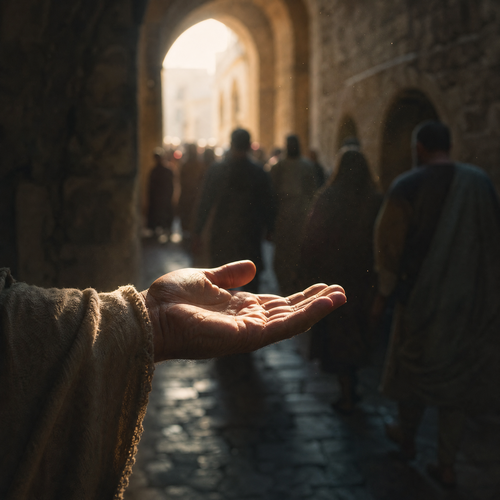
He was past forty years old, and he had never once walked.
Every morning someone carried him to the same spot — a gate outside the temple in Jerusalem, a gate people actually called Beautiful — and set him down where the crowds funneled in. He held out his hand. That was the job. That was the whole life.
I think about what that does to a person over four decades. You learn that most people won't look at you. You learn the particular geometry of a face deciding not to turn. Begging is already a stripping away of dignity; being ignored while you do it takes the rest.
So when two men stopped and looked straight at him — and one of them said "Look at us" — something must have jumped in his chest. Finally. Someone's going to give me something.
And then the man said: "Silver or gold I do not have."
He was asking for exactly the right thing
I want to defend him for a second, because it's easy to read this story and think he was asking too small.
He wasn't. Coins were the rational request. Coins were food that day. Given his situation, given what medicine and society could do for him, given that he'd been this way since birth — money was the only door anyone had ever shown him.
But notice what coins couldn't do. They couldn't get him through the gate. They couldn't end the arrangement. Whatever he collected that morning, he'd be back at the same spot tomorrow with his hand out again.
That's the quiet tragedy of the thing he was asking for. It worked, and it never finished working.
The disappointment before the gift
There's a detail here I find almost unbearable in the best way. The first-century historian Josephus describes the gates around that temple — nine of them covered over in gold and silver, and one made of Corinthian brass that, he says, far exceeded them. The famous gate wasn't the expensive one. Everybody knew it. You'd walk past all that plating to reach the one that was actually better.
And standing at that gate, the man is told: silver or gold I do not have.
Then: "But what I do have I give you. In the name of Jesus Christ of Nazareth, walk."
There is a beat in this story — brief, but real — where the answer to his prayer is no. He asked for money. He is being told, plainly, that money is not coming. If the story stopped one clause earlier, this is an account of a beggar being let down by two more men who had nothing for him.
Most of us have lived in that clause. We just didn't know a sentence was still going.
He wasn't helped up. He was raised.
The account says the man was taken by the right hand and helped to his feet, and his ankles instantly became strong (Acts 3:1–10). He went into the temple courts — the place he had sat outside of for forty years, never entering — walking and jumping and praising God.
The Greek word underneath "helped him up" is the same word used elsewhere for what God did to Jesus when he raised him from the dead. Whether or not that was deliberate, it fits. This isn't only a man getting his legs. It's a small, physical picture of what God is in the business of doing: taking a life that everyone had filed under permanent and standing it up.
Because that was the assumption about him. People in his world believed God could restore what had been lost — heal an injury, even raise the dead. But if you were born that way? That was just how it was. He wasn't a candidate for a miracle. He was furniture at the gate.
God has a habit of upsetting what everyone has settled.
The prayers I'm glad God didn't answer
I'll be honest with you about my own record here.
When I look back at what I prayed for in my teens and twenties — the things I wanted badly enough to beg for, the doors I was certain needed to open — I'm grateful for how many of them stayed shut. I could not see that at the time. In the moment, an unanswered prayer felt like an unanswered person. It took years before I could look back and see that some of those closed doors were the kindest things that ever happened to me.
That doesn't make the waiting easy, and I won't pretend it does. If you prayed for a marriage that ended anyway, or a diagnosis that didn't reverse, or a person who didn't come back, I'm not going to hand you a tidy explanation. I don't have one.
But I'd ask you to hold one thought alongside the grief: most of what we ask God for is something we'd have to ask for again. The job, the house, the outcome — even granted, none of it is guaranteed to still be there next year. Ask yourself honestly how many of the things you're praying for right now will matter to you in twenty years. On your last day, which of them will you be thinking about?
The things he was offered instead — forgiveness, a life that outlasts this one, God's own presence, the slow remaking of who he was — those are the things you never have to come back and beg for tomorrow.
What to do with the closed door
If you're carrying a prayer God didn't answer the way you asked, I don't think that means you weren't heard. It might mean the sentence isn't finished.
Here's a question worth sitting with: what have you been asking God for that, if you got it, you'd still need to ask for again next year?
And here's something you can do this week. Say the disappointment out loud, in actual words — not a polished prayer, just the real sentence: I asked you for this and you didn't give it to me. Then ask a second thing: What are you giving me instead? Then stay quiet long enough to hear an answer.
Every morning someone carried him to the same spot — a gate outside the temple in Jerusalem, a gate people actually called Beautiful — and set him down where the crowds funneled in. He held out his hand. That was the job. That was the whole life.
I think about what that does to a person over four decades. You learn that most people won't look at you. You learn the particular geometry of a face deciding not to turn. Begging is already a stripping away of dignity; being ignored while you do it takes the rest.
So when two men stopped and looked straight at him — and one of them said "Look at us" — something must have jumped in his chest. Finally. Someone's going to give me something.
And then the man said: "Silver or gold I do not have."
He was asking for exactly the right thing
I want to defend him for a second, because it's easy to read this story and think he was asking too small.
He wasn't. Coins were the rational request. Coins were food that day. Given his situation, given what medicine and society could do for him, given that he'd been this way since birth — money was the only door anyone had ever shown him.
But notice what coins couldn't do. They couldn't get him through the gate. They couldn't end the arrangement. Whatever he collected that morning, he'd be back at the same spot tomorrow with his hand out again.
That's the quiet tragedy of the thing he was asking for. It worked, and it never finished working.
The disappointment before the gift
There's a detail here I find almost unbearable in the best way. The first-century historian Josephus describes the gates around that temple — nine of them covered over in gold and silver, and one made of Corinthian brass that, he says, far exceeded them. The famous gate wasn't the expensive one. Everybody knew it. You'd walk past all that plating to reach the one that was actually better.
And standing at that gate, the man is told: silver or gold I do not have.
Then: "But what I do have I give you. In the name of Jesus Christ of Nazareth, walk."
There is a beat in this story — brief, but real — where the answer to his prayer is no. He asked for money. He is being told, plainly, that money is not coming. If the story stopped one clause earlier, this is an account of a beggar being let down by two more men who had nothing for him.
Most of us have lived in that clause. We just didn't know a sentence was still going.
He wasn't helped up. He was raised.
The account says the man was taken by the right hand and helped to his feet, and his ankles instantly became strong (Acts 3:1–10). He went into the temple courts — the place he had sat outside of for forty years, never entering — walking and jumping and praising God.
The Greek word underneath "helped him up" is the same word used elsewhere for what God did to Jesus when he raised him from the dead. Whether or not that was deliberate, it fits. This isn't only a man getting his legs. It's a small, physical picture of what God is in the business of doing: taking a life that everyone had filed under permanent and standing it up.
Because that was the assumption about him. People in his world believed God could restore what had been lost — heal an injury, even raise the dead. But if you were born that way? That was just how it was. He wasn't a candidate for a miracle. He was furniture at the gate.
God has a habit of upsetting what everyone has settled.
The prayers I'm glad God didn't answer
I'll be honest with you about my own record here.
When I look back at what I prayed for in my teens and twenties — the things I wanted badly enough to beg for, the doors I was certain needed to open — I'm grateful for how many of them stayed shut. I could not see that at the time. In the moment, an unanswered prayer felt like an unanswered person. It took years before I could look back and see that some of those closed doors were the kindest things that ever happened to me.
That doesn't make the waiting easy, and I won't pretend it does. If you prayed for a marriage that ended anyway, or a diagnosis that didn't reverse, or a person who didn't come back, I'm not going to hand you a tidy explanation. I don't have one.
But I'd ask you to hold one thought alongside the grief: most of what we ask God for is something we'd have to ask for again. The job, the house, the outcome — even granted, none of it is guaranteed to still be there next year. Ask yourself honestly how many of the things you're praying for right now will matter to you in twenty years. On your last day, which of them will you be thinking about?
The things he was offered instead — forgiveness, a life that outlasts this one, God's own presence, the slow remaking of who he was — those are the things you never have to come back and beg for tomorrow.
What to do with the closed door
If you're carrying a prayer God didn't answer the way you asked, I don't think that means you weren't heard. It might mean the sentence isn't finished.
Here's a question worth sitting with: what have you been asking God for that, if you got it, you'd still need to ask for again next year?
And here's something you can do this week. Say the disappointment out loud, in actual words — not a polished prayer, just the real sentence: I asked you for this and you didn't give it to me. Then ask a second thing: What are you giving me instead? Then stay quiet long enough to hear an answer.
Recent
Archive
2026
January
April
2025
April
May
June
August
No Comments