
The Fire Doesn't Stay Lit
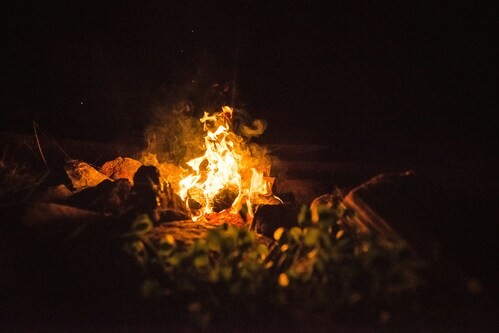
Photo by Ville Palmu on Unsplash
I've watched this happen to a hundred people, and I've felt it in myself.
Something breaks open. Maybe it was a week at camp, or a retreat, or one night you can still describe in detail years later. God felt close in a way that was almost physical. You drove home different, and you meant it.
Then two weeks passed. Then a month. The old rhythms came back — the commute, the phone, the noise — and one day you noticed the warmth was gone. You hadn't rejected anything. You hadn't decided against it. It had just cooled, the way a room cools after someone turns off the heat.
Here's what I want you to hear first: nothing went wrong. That's what fire does.
Fire doesn't stay lit
There's a strange little instruction buried in Leviticus, an ancient book of rules for Israel's priests. Their job was to tend the altar — a stone platform where offerings were burned as an act of worship. And God tells them: "The fire on the altar must be kept burning; it must not go out. Every morning the priest is to add firewood... The fire must be kept burning on the altar continuously; it must not go out" (Leviticus 6:12–13).
Notice what the instruction is not. It isn't light the fire. God did that part. The whole job is keeping it lit — and the method is almost embarrassingly ordinary. Every morning, somebody carried more wood.
Not a ceremony. Not a breakthrough. Firewood, before breakfast, every day, forever.
An altar was never just a pile of rocks
Read through the Old Testament and you keep tripping over the same scene. Noah steps off the ark and builds an altar. Abraham hears God's promise and builds an altar. Jacob has an encounter he can't explain and builds an altar. Moses meets God on the mountain and builds an altar.
It became the pattern: when God met his people, they piled up stones. Not because the stones were holy, but because people forget. An altar was a way of saying I don't want to lose this.
But an altar was never only about remembering. It was where something got given up. And that mattered enormously. There's a moment near the end of King David's life when a man offers to donate the animals and the land for David's sacrifice, free of charge. David refuses: "I will not sacrifice to the LORD my God burnt offerings that cost me nothing" (2 Samuel 24:24).
He understood something we're slow to learn. Worship that costs you nothing isn't worship.
It's decoration.
The altar call you actually need
In a lot of churches there's a moment near the end of the service called an altar call — an invitation to come forward and give your life to Jesus for the first time. It's a real and beautiful thing.
But I've become convinced that most of us don't need an invitation to start. We need one to come back.
The apostle Paul puts it this way: "Offer your bodies as a living sacrifice, holy and pleasing to God — this is your true and proper worship. Do not conform to the pattern of this world, but be transformed by the renewing of your mind" (Romans 12:1–2).
A living sacrifice. Which is a strange phrase, because the whole problem with a living sacrifice is that it keeps climbing off the altar. That's not a failure of your character. It's the definition of being alive. Which means the altar isn't a one-time decision you made at nineteen. It's a place you return to, most days, on purpose.
And Paul names the real threat precisely. It isn't rebellion. It's the pattern of this world — the ordinary, unglamorous flow of a normal week that will quietly carry you somewhere you never chose to go. Almost nobody walks away from God on purpose. Most of us just stop carrying wood.
Three small fires to feed
So here's what I'd actually put in your hands. Three rhythms, spread across a day. None of them take more than a few minutes.
Morning: read one verse. Not a chapter. One verse. Any Bible app will hand you a verse of the day, or you can find one at verseoftheday.com. Begin the day with something other than your notifications.
Midday: pray the Lord's Prayer. You can recite it in thirty seconds, but try walking through it slowly and making it yours. Our Father — remembering who God is. Hallowed be your name — giving him weight. Your kingdom come, your will be done — surrendering your agenda. Give us this day our daily bread — trusting him for what you need. Forgive us our debts, as we also have forgiven our debtors — receiving grace and handing it on. Lead us not into temptation, but deliver us from the evil one — depending on his protection.
Evening: name five things. Five specific things you're thankful for. I don't care how the day went. There's breath in your lungs and a bed you're about to sleep in. Find five.
That's it. That's the whole thing.
I know how unimpressive this looks. There's no intensity in it, no atmosphere, nothing you'd post about. But the power was never in the length of the prayer or the beauty of the words. Three ordinary rhythms, repeated, will do more in your life than one extraordinary night ever did — because they're what a person does when they've decided not to let the fire go out.
The wood you carry tomorrow
If you've been quietly grieving a warmth you used to have, I want you to know that the absence of the feeling is not the absence of God. Fires that aren't fed go out. That's physics, not judgment. And a fire that's gone cold can be built again from the same stones.
So here's the question worth sitting with: what have you stopped doing that you used to do?
Then pick one — just one — of the three above, and do it tomorrow. Not all three. Not a system. One.
Carry the wood in the morning. See what's still burning in a month.
Something breaks open. Maybe it was a week at camp, or a retreat, or one night you can still describe in detail years later. God felt close in a way that was almost physical. You drove home different, and you meant it.
Then two weeks passed. Then a month. The old rhythms came back — the commute, the phone, the noise — and one day you noticed the warmth was gone. You hadn't rejected anything. You hadn't decided against it. It had just cooled, the way a room cools after someone turns off the heat.
Here's what I want you to hear first: nothing went wrong. That's what fire does.
Fire doesn't stay lit
There's a strange little instruction buried in Leviticus, an ancient book of rules for Israel's priests. Their job was to tend the altar — a stone platform where offerings were burned as an act of worship. And God tells them: "The fire on the altar must be kept burning; it must not go out. Every morning the priest is to add firewood... The fire must be kept burning on the altar continuously; it must not go out" (Leviticus 6:12–13).
Notice what the instruction is not. It isn't light the fire. God did that part. The whole job is keeping it lit — and the method is almost embarrassingly ordinary. Every morning, somebody carried more wood.
Not a ceremony. Not a breakthrough. Firewood, before breakfast, every day, forever.
An altar was never just a pile of rocks
Read through the Old Testament and you keep tripping over the same scene. Noah steps off the ark and builds an altar. Abraham hears God's promise and builds an altar. Jacob has an encounter he can't explain and builds an altar. Moses meets God on the mountain and builds an altar.
It became the pattern: when God met his people, they piled up stones. Not because the stones were holy, but because people forget. An altar was a way of saying I don't want to lose this.
But an altar was never only about remembering. It was where something got given up. And that mattered enormously. There's a moment near the end of King David's life when a man offers to donate the animals and the land for David's sacrifice, free of charge. David refuses: "I will not sacrifice to the LORD my God burnt offerings that cost me nothing" (2 Samuel 24:24).
He understood something we're slow to learn. Worship that costs you nothing isn't worship.
It's decoration.
The altar call you actually need
In a lot of churches there's a moment near the end of the service called an altar call — an invitation to come forward and give your life to Jesus for the first time. It's a real and beautiful thing.
But I've become convinced that most of us don't need an invitation to start. We need one to come back.
The apostle Paul puts it this way: "Offer your bodies as a living sacrifice, holy and pleasing to God — this is your true and proper worship. Do not conform to the pattern of this world, but be transformed by the renewing of your mind" (Romans 12:1–2).
A living sacrifice. Which is a strange phrase, because the whole problem with a living sacrifice is that it keeps climbing off the altar. That's not a failure of your character. It's the definition of being alive. Which means the altar isn't a one-time decision you made at nineteen. It's a place you return to, most days, on purpose.
And Paul names the real threat precisely. It isn't rebellion. It's the pattern of this world — the ordinary, unglamorous flow of a normal week that will quietly carry you somewhere you never chose to go. Almost nobody walks away from God on purpose. Most of us just stop carrying wood.
Three small fires to feed
So here's what I'd actually put in your hands. Three rhythms, spread across a day. None of them take more than a few minutes.
Morning: read one verse. Not a chapter. One verse. Any Bible app will hand you a verse of the day, or you can find one at verseoftheday.com. Begin the day with something other than your notifications.
Midday: pray the Lord's Prayer. You can recite it in thirty seconds, but try walking through it slowly and making it yours. Our Father — remembering who God is. Hallowed be your name — giving him weight. Your kingdom come, your will be done — surrendering your agenda. Give us this day our daily bread — trusting him for what you need. Forgive us our debts, as we also have forgiven our debtors — receiving grace and handing it on. Lead us not into temptation, but deliver us from the evil one — depending on his protection.
Evening: name five things. Five specific things you're thankful for. I don't care how the day went. There's breath in your lungs and a bed you're about to sleep in. Find five.
That's it. That's the whole thing.
I know how unimpressive this looks. There's no intensity in it, no atmosphere, nothing you'd post about. But the power was never in the length of the prayer or the beauty of the words. Three ordinary rhythms, repeated, will do more in your life than one extraordinary night ever did — because they're what a person does when they've decided not to let the fire go out.
The wood you carry tomorrow
If you've been quietly grieving a warmth you used to have, I want you to know that the absence of the feeling is not the absence of God. Fires that aren't fed go out. That's physics, not judgment. And a fire that's gone cold can be built again from the same stones.
So here's the question worth sitting with: what have you stopped doing that you used to do?
Then pick one — just one — of the three above, and do it tomorrow. Not all three. Not a system. One.
Carry the wood in the morning. See what's still burning in a month.
Recent
Archive
2026
January
April
2025
April
May
June
August
No Comments